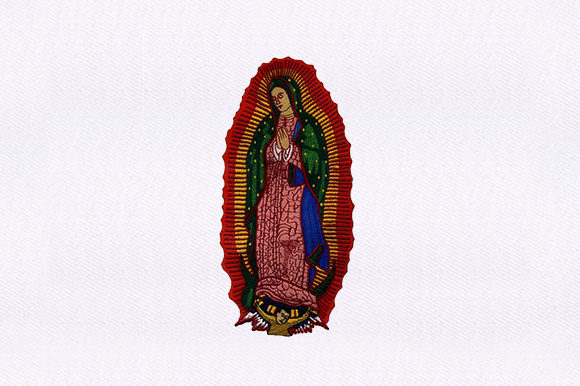
Praying Madonna: A Craft Fair Embroidery Design Review
The Friday night before a big weekend market. I am prepping my booth, sorting through my latest machine embroidery design tests. The Praying Madonna file is up on my screen. I have already stitched it out on a linen tote and a cotton tea towel. Now comes the real question: does it earn a spot on my display grid? As an experienced embroidery designer and Etsy seller, I look at every new embroidery file through a very specific lens. Will this sell at a craft fair? Does it look good in person? Can I produce it efficiently in batch? Let me walk you through my real-world evaluation of the Praying Madonna for your handmade product lineup.
First Impressions: Elegant, Reverent, and Market Ready
The first thing I noticed about the Praying Madonna design is its sense of calm and dignity. It does not scream for attention; it invites it. This is a piece that speaks to a specific customer looking for Religion based Embroidery that feels respectful and beautifully crafted. In a booth full of trendy sayings or farmhouse florals, this design stands out as a meaningful, giftable option. It feels premium, detailed, and ready for a loving home. The mood is reverent, soft, and classic. It is not a trendy design that will fade out next season; it is a staple that builds a loyal customer base.
Product-by-Product: Where Praying Madonna Shines in Your Booth
I always test a new design on my top-selling blanks. Here is where I saw the most potential for the Praying Madonna as a craft fair product.
Tote Bags and Market Bags
This is a home run. A large, sturdy tote bag design featuring the Praying Madonna is an instant gift item for churchgoers, grandmothers, and confirmation gifts. It sits beautifully centered on canvas or cotton totes. The perceived value jumps significantly. I would price this as a premium item in your booth. It is a conversation starter and a high-ticket sale.
Tea Towels and Kitchen Linens
Tea towel embroidery is a staple at any craft fair. The Praying Madonna works well here, but pay attention to fabric texture. A high-quality linen blend will hold the detail better than a thin flour sack towel. I recommend using a water-soluble topping to prevent the stitches from sinking into the weave. This keeps the design crisp and readable.
Apron Embroidery
An apron featuring the Praying Madonna is a wonderful item for the home baker or the church volunteer. It is a functional item that keeps the design visible. I would use a center chest placement for maximum impact. It feels like a uniform for a special purpose, which adds to its emotional value for the buyer.
Pillow Covers and Home Decor
For customers looking for a statement piece, an embroidered pillow cover is a fantastic option. The Praying Madonna becomes a focal point of a room. This is a high-ticket item in your booth that can drive up your average sale price. It signals quality and thoughtful design.
Embroidered Patches
I love testing a design as an embroidered patch. It allows me to offer a lower-cost item. Sew-on or iron-on patches of the Praying Madonna can be added to jackets, backpacks, or Bible covers. It is a great way to test the market without a huge commitment of materials. You can stitch out several patches in one hooping and sell them as quick, affordable gifts.
Fabric Pouches and Small Bags
Small zippered pouches are a fantastic entry-level price point. The Praying Madonna works well here if the pouch is large enough. A 9x6 inch pouch is ideal. It is a great "impulse buy" for your booth. Keep the design centered and scaled appropriately so the details do not get lost.
Caps and Hats: A Word of Caution
I will be honest here: use caution. The curved surface of a cap can distort the delicate lines of a religious figure. If you plan to stitch this on a cap, you must test it first. You may need to reduce the size or simplify the design to ensure the face and hands read clearly. Not every design works on a cap, and that is okay.
Production Reality: Stitch Density, Hoop Size, and Stabilizers
Before you stitch out 50 units for a show, you need to run a test. The quality of the machine embroidery design file is paramount. Here is my technical checklist for the Praying Madonna.
- Check the Stitch Density: If the design has areas of high stitch density, it can cause puckering on lighter fabrics or distort the design. Make sure your test stitch looks smooth and the fabric lies flat. Run your finger over the back of the design. Does it feel bumpy? Adjust your stabilizer.
- Confirm Your Hoop Size: The Praying Madonna likely requires a mid-to-large hoop size to capture all the beautiful details. Do not assume it fits a 4x4. Check the file dimensions in your software before loading your hoop. Nothing ruins a production run like a design that is too big for the frame.
- Thread Colors: Take note of the color changes. Will you use a solid color like gold or white, or will you use the full color palette? Monochromatic (gold thread on white fabric) can be very elegant and sell well. I tested a metallic gold version and it looked stunning on a dark navy tote.
- Stabilizer Choice: For a design with this much detail, I recommend a cut-away stabilizer for garments like aprons and tote bags to prevent the stitches from shifting over time. For towels, a medium-weight tear-away or water-soluble topping is necessary to keep the stitches from sinking into the terry.
- Fabric Texture: Test on the exact fabric you plan to sell. Thick canvas, denim, and linen all behave differently. The Praying Madonna deserves a quality fabric that does not fight the stitches.
Careful-Use Notes: Dark Fabric, Small Details, and Curved Surfaces
Every design has its quirks. Here are a few things I noticed during my test stitch of the Praying Madonna that you should watch out for:
- Dark Fabric: If you stitch this on a dark navy or black fabric, the fine details in the face and hands might get lost. Consider using a lighter thread color or a high-contrast metallic thread to make the image pop.
- Tiny Details: The beauty of this design is in the details. However, if you drastically reduce the size to fit a small hoop size, those details can become thread nests. I recommend sticking to the original size or larger.
- Small Lettering: If the design includes small text or dense script, test it carefully on textured fabrics like tea towels. The stitches can sink in and become unreadable.
- Thick Fabrics: Heavy canvas or denim are great for structure, but they require a stronger needle and a quality stabilizer to avoid skipped stitches. Use a sharp needle and slow down your machine speed.
Photography and Online Sales for Etsy Sellers
As an Etsy seller, I know that a great photo sells the product. The Praying Madonna design needs to be photographed with intention. The lighting should be soft and warm to reflect the reverent mood. I recommend using a printable mockup for your initial listing, but always follow it up with a real photo of the finished product. Show the texture of the stitches, the sheen of the thread, and the way it looks on a finished handmade product. Buyers trust authenticity. When creating your design assets, consider the background. A dark wood table or a piece of linen fabric creates a beautiful contrast. If you are selling the digital embroidery file itself, ensure your mockup clearly shows the stitch details.
Commercial Licensing and Batch Production
Before you sew a single stitch for sale, confirm the commercial licensing of the Praying Madonna design. Most embroidery file purchases for small shops include a license to sell the finished product, but you must verify this. Do not skip this step. There is nothing worse than designing a whole booth display around a design only to find out you cannot sell the products.
For batch production, I recommend stitching out a few samples in different sizes and on different fabrics. This gives you a "menu" of options for your customers. You can offer the Praying Madonna on a small pouch for $15, a tea towel for $25, and a premium tote bag for $35. This tiered pricing strategy works wonders at craft fairs. It allows you to capture customers at different budget levels while maximizing your profit per item.
Your Pre-Production Checklist for Praying Madonna
Before you start stitching out 20 units for your next craft fair, follow this quick checklist to ensure quality:
- Test on Scrap Fabric: Always stitch the design out on a scrap piece of your chosen fabric. Check for puckering, thread breaks, and alignment.
- Evaluate Thread Contrast: Hold the fabric at arm's length. Does the design stand out? If not, change your thread palette.
- Review Spacing and Placement: Hoop the fabric and check the placement on the blank. Is it centered? Is it too high or too low?
- Inspect Stitch Density: Run your finger over the stitched design. Does it feel overly thick or stiff? Adjust your stabilizer if needed.
- Create a Real Mockup: Take a high-quality photo of the finished product for your Etsy seller listing. A real photo beats a printable mockup every time for building trust.
- Verify Commercial Licensing: Double check the license of your digital embroidery file to ensure you can legally sell the finished product at craft fairs.
Final Verdict: Is Praying Madonna a Booth Winner?
Absolutely. The Praying Madonna is a strong, versatile machine embroidery design that fills a specific and loyal niche in the handmade market. It brings a sense of peace and quality to your booth that attracts a customer looking for a meaningful gift or a personal treasure. It is a design that respects the craft and the customer. My advice: Test it, photograph it beautifully, and display it prominently. It will find its audience. Whether you are selling at a church bazaar, a weekend craft fair, or on your Etsy shop, this design has the potential to be a consistent, respectful, and profitable part of your small shop product lineup. It has earned a permanent spot in my production rotation, and I am confident it will do the same for you.