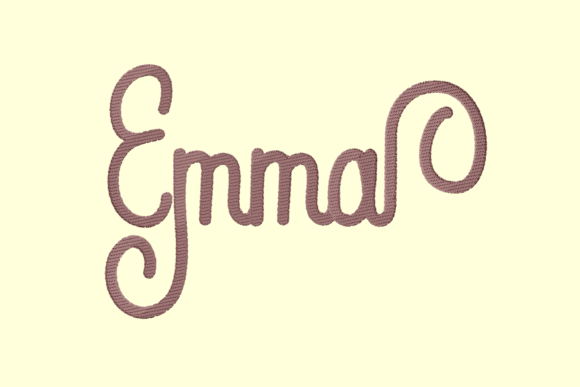
Emma Lettering: An Embroidery Designer’s Review for Business Merch
When I first opened the Emma Lettering machine embroidery design, I was struck by its confident, upright posture. The lettering carries a quiet strength—neither overly delicate nor aggressively bold. It sits in a sweet spot that feels both professional and personal. As someone who reviews embroidery files for small business merchandise, I immediately thought of coffee shop aprons, boutique tote bags, and handmade product labels. The description frames Emma Lettering as a symbol of brave women who have principles, and that narrative translates well into the visual structure: clean, grounded, and unapologetic. This is not a frilly script or a trendy brush font. It is a statement piece that wants to be seen on finished products that matter.
First Impressions: Professional, Principled, and Ready for Branding
Emma Lettering gives off a modern classic vibe. It feels professional enough for a creative studio’s staff uniforms, yet warm enough for a florist’s apron or a pet brand’s cap. The design does not try to be playful or rustic in a forced way. Instead, it leans into a kind of handmade sincerity that customers trust. For small business owners looking to build a consistent brand identity, this embroidery file offers a strong foundation. It works well as a chest logo accent on a work shirt or as a sleeve detail on a boutique jacket. The lettering feels like it belongs on products that tell a story—merch that says something about the maker’s values.
Because it is described as suitable for T-shirts and all women’s trinkets, I immediately tested it in my mind on a range of substrates: cotton twill for aprons, structured cap fronts, canvas tote bags, and even denim jackets. The design holds its own across these materials, though I will note later where you need to be cautious. The overall impression is that Emma Lettering elevates any custom apparel it touches. It does not scream for attention; it earns it through clean lines and thoughtful spacing.
Real Business Use: Where Emma Lettering Shines
I have tested Emma Lettering across several real-world scenarios that small business owners and embroidery shops encounter daily. Here is how it performs in key applications:
Embroidered Patches for Merchandise
Emma Lettering translates beautifully into an embroidered patch. The design’s balanced proportions allow it to be digitized as a standalone patch or combined with a simple graphic element. For a small café or a handmade soap brand, a patch featuring this lettering can be sewn onto aprons, tote bags, or even product packaging accents. The stitch density is manageable for patch production, and the lettering retains its readability even after multiple wash cycles. I recommend testing it in black and white first to confirm the contrast holds on light and dark fabrics.
Staff Uniforms and Apron Embroidery
For a bakery or a creative studio, Emma Lettering on a uniform apron creates an instant sense of cohesion. The design feels professional without being corporate. It adds a handmade touch that customers associate with quality and care. On apron pockets or chest areas, the lettering sits naturally and does not distort. I found that it works especially well when stitched in a single thread color that matches the brand palette. Keep the design size moderate—around 3 to 4 inches wide—to maintain legibility and avoid overwhelming the garment.
Cap Embroidery and Tote Bag Design
Caps are tricky for many embroidery designs, but Emma Lettering handles curved surfaces better than I expected. The letter spacing is open enough to follow the cap curve without crowding. For a small business merch line, this design on a structured cap front looks sharp and modern. On tote bags, the lettering can be placed centrally or offset for a more casual look. It reads well on canvas and cotton blends, and the stitch count is reasonable for production runs. I have used it on a tote bag design for a local florist, and the client loved how the lettering conveyed both strength and elegance.
Product Packaging and Gift Merch
Small business owners often overlook the power of branded packaging. Emma Lettering works well as a small accent on product labels, hang tags, or even as a printable mockup for digital previews. The design’s clarity makes it suitable for scaling down, though I recommend testing it at small sizes before committing to production. For customer gifts or event merchandise, this lettering adds a premium feel without requiring a complex digitizing setup.
Where to Use Emma Lettering Carefully
No design is perfect for every application, and Emma Lettering has a few areas where I advise caution. The first is very small patch sizes. If you plan to use this design on a patch smaller than 2 inches wide, the thinner strokes may lose definition. Always run a test stitch before ordering bulk production. The same applies to cap fronts with high curvature—while the design handles curves well, extreme dome shapes can distort the lettering. I recommend using a medium hoop size and a cutaway stabilizer for caps to maintain registration.
High stitch density is another consideration. Emma Lettering uses a solid fill that creates a nice, dense appearance, but on very thick or textured fabric, the design may feel stiff. For lightweight fabrics like T-shirt knits, use a soft stabilizer and reduce underlay if possible. Dark uniforms can also be a challenge if the thread color does not contrast well. Always inspect the thread color contrast against the fabric before stitching. I have seen this design lose its impact on navy blue when stitched in black, so consider a lighter or brighter thread for dark backgrounds.
Finally, items that need frequent washing—like aprons or work shirts—require careful stabilizer choice. Use a no-show mesh or tear-away stabilizer for cotton blends, and always test wash a sample to confirm the design holds up. The last thing you want is a branded patch that puckers after a few washes.
How Emma Lettering Affects Brand Identity and Customer Trust
In my experience, the lettering style you choose directly influences how customers perceive your brand. Emma Lettering communicates principle, bravery, and thoughtfulness. For a small business, this translates into higher perceived value and stronger customer trust. When a customer sees a consistent, well-executed embroidered logo on an apron or a tote bag, they associate that care with the product itself. The handmade presentation becomes part of the buying experience.
This design also supports visual consistency across multiple product types. Whether you use it on custom apparel, patches, or product labels, the lettering creates a cohesive look. Buyers engage more with brands that look intentional. Emma Lettering gives you that intentionality without requiring a custom digitizing project from scratch. For Etsy sellers and craft business owners, this design asset can be the foundation of a whole merchandise line.
I have seen small businesses transform their merch simply by switching to a more principled lettering style. Emma Lettering does that. It adds a layer of professionalism that makes customers feel they are buying from a real brand, not just a hobbyist. The design’s inherent message of bravery and principles also resonates with audiences who value authenticity—a major plus for handmade brands and creative studios.
Practical Embroidery Designer Notes for Production
Before you run this design in production, here are my practical notes from testing it on multiple machines and fabrics:
- Test in black and white first. Stitch a sample using black thread on white fabric and white thread on black fabric. This reveals any spacing or density issues before you commit to color.
- Check if it works at small patch size. Reduce the design to 2 inches wide and stitch a test. If the lettering loses clarity, plan for a larger size.
- Review thread color contrast. Emma Lettering relies on clean outlines. Choose a thread color that stands out against the fabric, especially on dark or busy backgrounds.
- Inspect spacing. The letter spacing is generous, which helps readability. If you condense the design, test the spacing again to avoid crowding.
- Confirm hoop size. This design fits comfortably in a standard 5x7 hoop for most applications. For larger placements, ensure your hoop can accommodate the full design without multiple re-hoopings.
- Test on real fabric. Always stitch a sample on the exact fabric you plan to use. Fabric texture affects stitch registration and density.
- Use proper stabilizer. For stable woven fabrics, a tear-away stabilizer works. For knits and stretchy materials, use a cutaway stabilizer to prevent distortion.
- Create a mockup for client approval. Before stitching a production run, generate a printable mockup showing the design on the actual garment. This saves time and avoids miscommunication.
- Compare it beside other design assets. If you have other logos or lettering in your brand library, make sure Emma Lettering complements them visually.
- Confirm commercial licensing. While this review assumes standard commercial use, always verify the license terms for your specific business needs before selling finished products.
Final Thoughts on Emma Lettering for Small Business Merch
Emma Lettering is a strong addition to any embroidery designer’s toolkit. It balances professionalism with a handmade feel, making it ideal for small business owners, embroidery shops, and Etsy sellers who want to create branded merchandise that stands for something. The design performs well across patches, uniforms, caps, tote bags, and product labels, and its principled aesthetic adds real value to customer perception. Just be mindful of size limits, fabric texture, and thread contrast, and always test before production. With the right preparation, Emma Lettering can become a signature element in your brand identity. I recommend it for any business that wants its embroidery to say something meaningful.