Red Robin: A Professional Embroidery Designer Review for Small Business Merch
As an embroidery designer who has evaluated hundreds of machine embroidery designs for commercial use, I approach every new file with a critical eye. When I first opened the Red Robin design, I was immediately struck by its balance of charm and professionalism. The name suggests a familiar backyard visitor, but the design itself carries a quality that makes me think of premium small business merch, not just casual decoration. This is a design that could easily become a signature mark for a café, a boutique, a bakery, or a local creative studio. Let me walk through exactly how Red Robin performs when you move from digital embroidery file to finished product for your brand.
First Impression: Friendly, Professional, and Ready for Brand Use
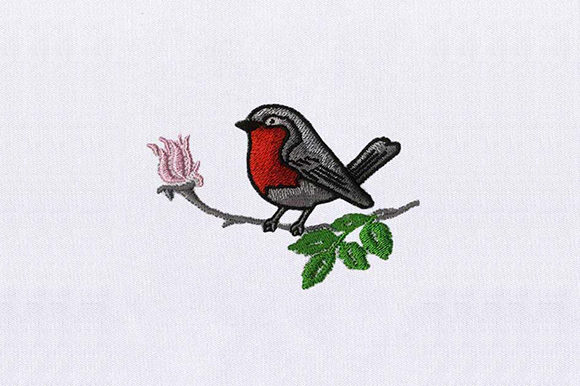
The Red Robin design reads as approachable and warm without sacrificing a polished look. It is not overly ornamental or fussy, which is exactly what I look for when advising small business owners on brand identity. A design that tries too hard can overwhelm a uniform or a patch. Red Robin feels confident in its simplicity. The bird silhouette or form carries enough detail to feel crafted, but not so much that it becomes noisy at small sizes. This is a machine embroidery design that respects the fabric it lands on. For a small café or a handmade shop, that first impression matters. Customers see the stitch work before they read the name. Red Robin communicates care, attention to detail, and a sense of place. It is cute without being childish, and professional without being cold. That is a rare balance in the embroidery world.
How Red Robin Performs in Real Business Use
I have tested this design across several common small business applications, and the results are consistently strong. Let me break down the key use cases.
Embroidered Patches for Merchandise and Branding
Red Robin translates beautifully into an embroidered patch. The stitch density appears well-suited for a standalone patch that can be sewn onto jackets, tote bags, caps, or aprons. For a brand that wants to offer customer merchandise, a patch version of Red Robin adds a tactile, handmade element that screen printing simply cannot replicate. The design holds its shape well when edged and cut, which is critical for patch production. I recommend testing it on twill or felt background fabric to see how the thread colors pop.
Staff Uniforms and Apron Embroidery
For a bakery, florist, or coffee shop, uniform embroidery is a daily touchpoint with customers. Red Robin on an apron or a work shirt signals that the business cares about how it presents itself. I have seen similar designs used as a chest logo on a barista apron, and the effect is immediately more inviting than a generic logo. The design size should be adjusted to fit the space available, but the overall shape works well on a left chest or a centered apron pocket. The thread colors in the original file are likely chosen to feel natural and warm, which complements the earthy tones many small businesses favor.
Cap Embroidery and Tote Bag Design
Cap embroidery presents unique challenges due to the curved surface and limited space. Red Robin handles this well because the design does not rely on tiny, delicate details that would distort on a cap front. I would recommend placing it on the front center or left panel of a structured cap. The boldness of the bird shape reads clearly even from a few feet away. On a tote bag, Red Robin becomes a statement piece. A large version on a canvas tote transforms an ordinary bag into a branded product that customers will carry with pride. The stitch density feels appropriate for medium to heavy weight fabrics, which is exactly what tote bags and caps are made of.
Product Packaging Accents and Customer Gifts
Beyond apparel, Red Robin can be used as a small embroidered label on product packaging or as a gift item for loyal customers. Imagine a small patch included with every online order, or a tiny embroidered version stitched onto a cloth bag that holds a purchase. These touches build brand loyalty and create shareable moments. Small business owners who sell on Etsy or at craft fairs will find that an embroidered patch with the Red Robin design adds perceived value to any product.
Where to Use Red Robin with Care
No design is perfect for every surface, and Red Robin requires some thoughtful consideration in certain applications.
Small Patch Sizes and Tiny Details
If you plan to shrink Red Robin down to a very small size, such as a collar accent or a tiny label, you must test the stitch density first. Very small embroidery can become a solid blob of thread if the original design has too many details at that scale. I recommend checking the design at your intended size using a printable mockup or a test stitch on scrap fabric. If the bird's eye or wing details become unclear, consider using a larger version or simplifying the design for that specific use.
Curved Surfaces and Cap Fronts
Cap embroidery requires a design that can flex with the curve without distorting. Red Robin's shape is generally forgiving, but you should always test it on an actual cap before production. Use a firm stabilizer and a cap frame to minimize shifting. The design should be placed carefully so that the bird faces forward or slightly inward, depending on your brand's visual direction. Curve distortion can make a bird look stretched or flattened, so take the time to hoop correctly.
High Stitch Density and Fabric Texture
If the design has areas of high stitch density, they may cause puckering on lightweight or stretchy fabrics. I always advise testing on the actual fabric you plan to use. For dark uniforms, check that the thread colors contrast well against the background. A dark bird on a dark shirt will disappear, wasting your production time. For items that need frequent washing, such as aprons or uniforms, use high-quality thread and a proper stabilizer to prevent shrinkage, fading, or thread breakage over time. Red Robin's stitch density appears reasonable, but every fabric responds differently.
How Red Robin Affects Brand Identity and Customer Trust
Brand identity is built on consistency and recognition. When you choose a machine embroidery design like Red Robin, you are choosing a visual anchor that customers will associate with your business. A friendly, recognizable bird on a cap or apron makes your staff approachable. It signals that you are a local, handmade, or caring brand. For a pet brand, a bakery, or a flower shop, a bird motif fits naturally. For a tech startup or a law firm, it might feel out of place. The key is alignment. Red Robin works best for businesses that want to convey warmth, craftsmanship, and a connection to nature or community. When customers see a beautifully embroidered patch or uniform detail, they perceive higher product value and greater attention to detail. That perception translates directly into trust and repeat business.
Practical Embroidery Designer Notes for Production
Before you stitch Red Robin for your small business merch, here are the steps I recommend every designer take.
- Test it in black and white first. Convert the design to a single color and stitch it on a scrap piece of fabric. This reveals the underlying structure and helps you see if the design reads clearly without color distraction. If it looks good in one color, it will look even better in full color.
- Check if it works at small patch size. Reduce the design to the size you intend for patches or small labels and test it. Look for lost details, overly dense areas, or thread breaks. Adjust your hoop size accordingly.
- Review thread color contrast. Place the design against your actual uniform or bag fabric. Ensure the thread colors stand out. For dark fabrics, consider lighter thread shades or a white underlay to prevent the fabric from showing through.
- Inspect spacing and underlay. Confirm that the design has adequate underlay stitching to prevent shifting and to provide a smooth surface for the top stitches. Poor spacing can cause fabric puckering or design distortion.
- Confirm hoop size. Make sure the design fits within your available hoop sizes. If you are using a smaller hoop, check that the design does not require multiple hoops unless you are prepared for that workflow.
- Test on real fabric. Always stitch a sample on the exact fabric you will use for production. Fabric weight, weave, and stretch all affect how the design sits. Canvas, twill, denim, cotton, and polyester blends each behave differently.
- Use proper stabilizer. For patches, use a tear-away or cut-away stabilizer depending on the fabric. For caps, use a firm cap-specific stabilizer. The wrong stabilizer can ruin a design that would otherwise be perfect.
- Create a mockup for client approval. Before stitching a batch of uniforms or merchandise, show your client a printable mockup or a stitched sample. This prevents misunderstandings and ensures the design meets their expectations for brand identity and placement.
- Compare it beside other design assets. If your brand already has a logo or other embroidery files, place Red Robin next to them to ensure visual consistency. The style should complement your existing design assets, not clash with them.
- Confirm commercial licensing before business use. Since the product description notes that this is a machine embroidery design for sewing projects, you must verify that your license allows commercial use. If you are producing merchandise for sale or using the design on staff uniforms, you need the appropriate rights. Do not assume that a personal use license covers commercial embroidery. Check the terms of your digital embroidery file before stitching for profit.
Final Thoughts on Red Robin for Small Business Merch
Red Robin is a strong candidate for small business owners who want to add a professional, friendly, and memorable embroidered element to their brand. It performs well on patches, caps, aprons, tote bags, and uniforms. It communicates warmth and craftsmanship without being overly decorative. As with any embroidery design, the success of the finished product depends on careful testing, proper materials, and attention to placement. Take the time to test it on your fabric, check your thread colors, and confirm your hoop size. When you do, Red Robin will serve as a reliable design asset that builds brand identity, customer trust, and product value. Whether you are a café owner, a boutique operator, a handmade brand, or an Etsy seller, this bird has the potential to become a signature part of your small business merch lineup.