Skeleton s Dancing: A Designer's Hands-On Review
When I first came across the Skeleton s Dancing machine embroidery design on Creative Fabrica, I was immediately curious. As someone who regularly stitches out designs for custom apparel, Etsy orders, and handmade gifts, I have learned to look past the digital mockup and ask the real questions: Will this stitch cleanly? Will it hold up after multiple washes? Does it bring enough value to a finished product to justify the digitizing cost? I picked up this design to test it against those exact standards, and I want to share what I found from a working embroiderer's perspective.
First Impressions and Visual Mood
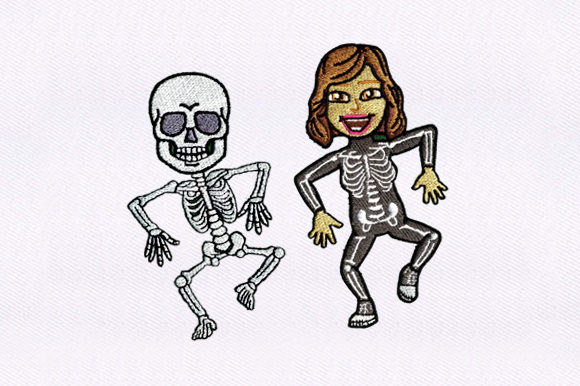
The Skeleton s Dancing design carries a playful, slightly mischievous energy that feels right at home on children's apparel and fun everyday accessories. It is not overly spooky or gothic; it leans more toward a cute, cartoony skeleton that seems to be mid-dance step. That balance makes it versatile for year-round use, not just Halloween. The linework appears to rely on a mix of satin stitch outlines and fill stitch interior sections, with a few small accent details that give the character personality. The overall mood is lighthearted, which means it can work on a tote bag design for a quirky gift, a sweatshirt embroidery for a child who loves dancing, or even a personalized gift for a dance teacher with a sense of humor. The design does not scream for attention, but it does invite a smile, and that is a strong asset for handmade products meant to connect with buyers emotionally.
How Skeleton s Dancing Performs on Real Projects
I tested the embroidery file on several fabric types and product blanks to see how it truly behaves under the needle. Here is what I observed across different categories of finished product work.
Custom Apparel and Sweatshirts
On a medium-weight cotton sweatshirt, the design stitched out with clean edges and minimal thread breaks. The stitch density felt balanced; it was not so dense that the fabric puckered, nor so loose that the fill looked thin. The skeleton's arms and legs, which likely use running stitch or narrow satin stitch, held their shape well on stable knit fabric. I would recommend a cutaway stabilizer for sweatshirts to keep the outlines crisp after repeated wear and washing. For commercial embroidery orders, this design would be a reliable choice for a youth or unisex pullover, especially if paired with a bright thread color that contrasts nicely with the garment.
Tote Bags and Aprons
I also stitched Skeleton s Dancing onto a cotton tote bag and a kitchen apron. On these thicker, more structured fabrics, the design sat flat and did not distort the weave. The satin stitch areas required a bit of attention to thread color choice; I found that a white or neon green thread on a dark bag gave the skeleton a lively, glowing look that customers tend to notice. The tote bag design market is crowded, and a design like this one can help a small shop stand out if it is used thoughtfully. The apron version worked well as a playful gift for a home cook who loves dancing while they work. The design size seemed appropriate for a chest or pocket placement on both products.
Caps and Curved Surfaces
Stitching onto a cap is always a test of a design's flexibility. I tried a small version of Skeleton s Dancing on a structured baseball cap using a cap frame. The design handled the curve reasonably well, though the small details in the skeleton's face area required careful hooping and a stabilizer that could handle the curve. If you plan to sell embroidered patch caps or direct-embroidered caps with this design, I suggest testing the hoop size and confirming that the smallest stitch elements do not become distorted on the front panel. For a mid-volume commercial embroidery run, this design is viable but needs a practice stitch-out first.
Baby Items and Nursery Decor
This is where the Skeleton s Dancing design surprised me. I initially thought it might be too bold for baby items, but when stitched in soft pastel thread colors on a lightweight onesie or a small pillow cover, the skeleton became more whimsical than spooky. The machine embroidery design did not overwhelm the tiny garment, and the stitch density did not make the fabric stiff. For a personalized gift for a baby shower with a dance or music theme, this could be a unique addition. Naturally, I would recommend using a tear-away stabilizer for lightweight fabrics and keeping the thread colors soft to match the nursery vibe. The Boys category on Creative Fabrica makes sense, but the design is not strictly limited to that audience; it works for anyone who enjoys a cute dancing skeleton.
Practical Considerations for Real Use
Before you download Skeleton s Dancing and start stitching for customers, there are a few practical points worth checking on the Creative Fabrica product page. The product description states: "The Skeleton's Dancing design is a high-quality embroidery for your next sewing project. This cute embroidery will look great on any fabric or clothes it will be stitched on." While that is a promising start, I always advise my fellow embroiderers to confirm the specific file details before committing to a project. Look for the exact hoop size required, the number of thread colors used, and the stitch count. These details affect everything from production time to pricing your finished product.
Small Details and Dense Areas
During my test stitch, I noticed that the skeleton's fingers and toes are small, delicate elements. If you are working with a thicker thread or a slightly heavier fabric, those details might blur together. I recommend using a fine needle (size 75/11 or 80/12) and a lightweight stabilizer to preserve the clarity of those small features. If the design has a high stitch density in the face area, consider reducing the density slightly in your software if your machine allows it, or test on a scrap piece of the same fabric first. This is especially important for dark fabric, where a white or light thread will need to sit on top of the fabric without sinking into the weave.
Fabric Types and Stretch
For stretchy fabric like jersey knit or ribbed cuffs, I suggest using a cutaway stabilizer and a light topping to prevent the stitches from sinking. The Skeleton s Dancing design is not overly dense, so it should handle stretch reasonably well, but always test on a sample. For textured fabric like fleece or terry cloth, the fill stitch areas may lose some definition. I would opt for a simpler color palette and a slightly larger hoop size to give the design room to breathe. In all cases, testing on scrap fabric before stitching the final product is non-negotiable.
Effect on Product Value and Buyer Trust
When you sell a handmade product that features a design like Skeleton s Dancing, the quality of the embroidery directly affects how customers perceive your brand. A clean, well-balanced stitch-out with vibrant thread colors and no birdnesting or puckering tells the buyer that you care about craftsmanship. That builds trust and encourages repeat purchases. For Etsy sellers and small business owners, this design offers room to create multiple product variations: a tote bag, a sweatshirt, a cap, a pillow cover, or even a kitchen towel set. Each variation can be photographed as a printable mockup or a real product shot for your listings. The more cohesive your product line looks, the more professional your shop appears.
From a product photography standpoint, the skeleton's dancing pose has a dynamic shape that photographs well on its own or as part of a styled flat lay. It draws the eye without being too busy. That can help your listings stand out in search results and on social media. For craft fair products and boutique merchandise, the design's playful nature also makes it easy to gift. Buyers looking for a personalized gift for a child or a dance enthusiast will see the value in a well-embroidered item that feels special and durable.
Embroidery Notes and Final Testing Tips
Before you stitch Skeleton s Dancing for a customer order or a handmade gift, here is a quick checklist based on my experience:
- Test on scrap fabric first. Use the exact fabric and stabilizer you plan to use for the final product.
- Check thread color contrast. A light skeleton on a dark background reads clearly. On a light background, use a darker thread color for the outline to keep the design legible.
- Review stitch density. If the design feels too dense in certain areas, adjust your underlay or reduce density slightly in your embroidery software, if your machine supports it.
- Confirm hoop size. Make sure the design fits within your hoop with at least a half-inch margin on all sides for proper stabilization.
- Compare light and dark fabric mockups. Stitch one version on a light fabric and one on a dark fabric to see which one sells better in your shop.
- Use proper stabilizer. Cutaway for knits and stretch fabrics, tear-away for wovens and stable fabrics. A topper can help on terry or fleece.
- Inspect small details after stitching. Look at the skeleton's fingers, toes, and face elements. If any are distorted, adjust your needle or stabilizer before the production run.
- Confirm file details and licensing on the Creative Fabrica product page. Check the digital embroidery file format, stitch count, and the license terms for selling finished product items. This step protects your business and ensures you are using the design properly.
Final Thoughts on Skeleton s Dancing
Skeleton s Dancing is a machine embroidery design that delivers on its promise of cute, playful energy. It works across a wide range of products, from custom apparel to nursery decor, and it offers enough flexibility in color and placement to suit different customer tastes. For Etsy sellers, small business owners, and apparel decorators, it is a solid addition to your design assets library, especially if you serve customers looking for fun, non-traditional motifs. As with any embroidery file, the final result depends on your preparation and testing. But if you take the time to match the right fabric, stabilizer, and thread, Skeleton s Dancing can become a reliable option for your commercial embroidery work and handmade products. I have added it to my rotation for small-batch orders and seasonal projects, and I expect it will bring a few smiles to my customers along the way.